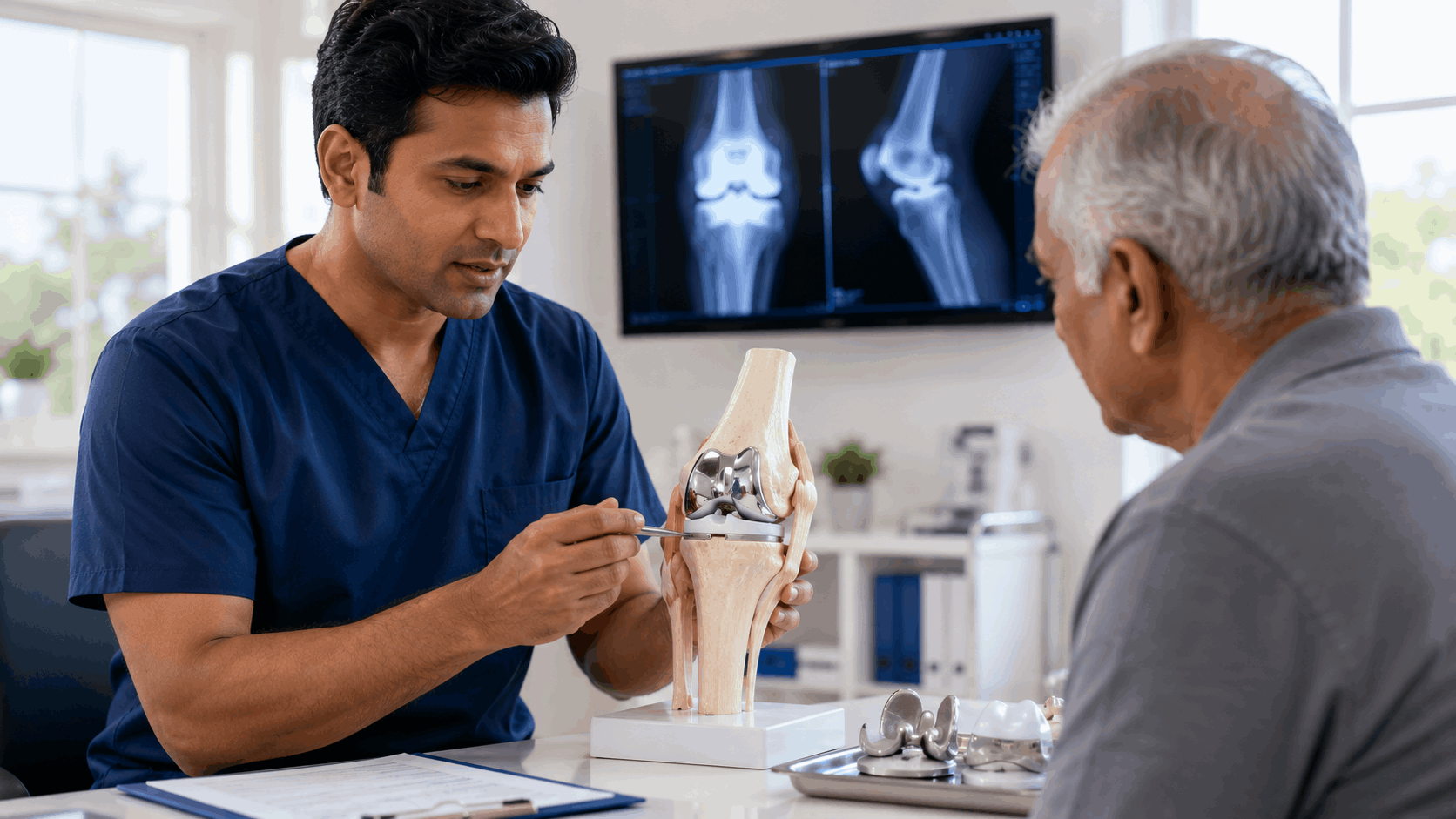
Living with constant knee pain can affect every aspect of your life. Simple activities such as walking, climbing stairs, getting up from a chair, or even sleeping comfortably may become increasingly difficult. While mild knee pain often improves with rest, medications, or physiotherapy, severe and persistent pain may indicate advanced joint damage that requires surgical treatment.
Total Knee Replacement Surgery is one of the most successful orthopedic procedures for people suffering from chronic knee pain caused by arthritis or severe joint damage. It is designed to relieve pain, restore movement, and improve quality of life when non-surgical treatments are no longer effective.
If you are wondering whether it is the right time to consider knee replacement surgery, understanding the symptoms, treatment options, and benefits can help you make an informed decision. Dr. Praveen Reddy provides comprehensive evaluation and personalized treatment plans to help patients achieve lasting pain relief and regain an active lifestyle.
Total Knee Replacement Surgery, also known as Total Knee Arthroplasty, is a procedure in which the damaged surfaces of the knee joint are replaced with artificial components made from durable metal and medical-grade plastic.
The surgery is recommended when the natural knee joint has been severely damaged due to arthritis, injury, or long-term wear and tear. The artificial joint is designed to restore smooth movement, improve stability, and significantly reduce pain.
Modern surgical techniques have made knee replacement safer and more effective than ever before. Most patients experience substantial improvements in mobility and are able to return to their normal daily activities after completing rehabilitation.
Several orthopedic conditions can gradually damage the knee joint and lead to chronic pain.
Osteoarthritis is the most common reason for knee replacement surgery. As the protective cartilage wears away, the bones begin rubbing against each other, causing pain, swelling, stiffness, and restricted movement.
Other conditions that may require knee replacement include rheumatoid arthritis, post-traumatic arthritis following fractures or ligament injuries, severe cartilage damage, deformities of the knee joint, and avascular necrosis.
Although these conditions develop differently, they often produce similar symptoms that become progressively worse if left untreated.
Many patients wonder how to know when knee replacement surgery is necessary. While every individual is different, there are several warning signs that indicate conservative treatments may no longer be sufficient.
You should consult an orthopedic specialist if you experience:
If these symptoms continue for several months and affect your independence, it may be time to consider surgical treatment.
Before recommending surgery, orthopedic specialists usually explore non-surgical treatment options. Many patients experience significant relief through conservative management, particularly during the early stages of knee arthritis.
Treatment may include pain-relieving medications, anti-inflammatory medicines, physiotherapy, strengthening exercises, weight management, activity modification, and knee braces.
However, when these treatments no longer provide lasting relief and knee pain continues to interfere with everyday life, Total Knee Replacement Surgery may become the most effective option for restoring mobility and reducing chronic pain.
One of the biggest advantages of knee replacement surgery is the dramatic improvement in quality of life. Patients who have struggled with pain for years often notice significant changes after successful surgery and rehabilitation.
Most patients experience:
Many patients are also able to return to low-impact recreational activities such as walking, swimming, cycling, and light exercise after recovery.
The procedure is performed under anesthesia and generally takes between one and two hours. During surgery, the damaged cartilage and worn-out bone surfaces are carefully removed from the knee joint.
These damaged surfaces are then replaced with specially designed artificial implants that replicate the natural movement of the knee. Once the implants are securely positioned, the surgeon closes the incision and the recovery process begins.
Patients are usually encouraged to begin gentle movement and walking soon after surgery under the guidance of physiotherapists.
Recovery is an important part of achieving the best possible outcome after surgery. Every patient's recovery timeline is different and depends on factors such as age, overall health, fitness level, and commitment to rehabilitation.
Most patients begin walking with assistance within one or two days after surgery. Physiotherapy plays a vital role in restoring strength, flexibility, and joint function.
Following your rehabilitation program, maintaining a healthy weight, and performing recommended exercises consistently can significantly improve recovery and long-term results.
Most patients are able to resume normal daily activities within a few weeks, while complete recovery may take several months.
Choosing the right orthopedic surgeon is one of the most important decisions for successful treatment. Dr. Praveen Reddy provides comprehensive orthopedic care with a focus on accurate diagnosis, personalized treatment, and advanced surgical techniques.
Every patient receives an individualized treatment plan based on their symptoms, lifestyle, activity level, and long-term goals. Whenever possible, non-surgical treatments are recommended first, with surgery considered only when it offers the best chance for lasting relief.
His areas of expertise include knee replacement surgery, joint replacement procedures, arthroscopy, sports injury treatment, fracture management, trauma care, and comprehensive orthopedic services.
Patients requiring complete evaluation may also benefit from Orthopedic Services, while those with ligament injuries can explore Arthroscopy Surgery before considering joint replacement.
How do I know if I need a total knee replacement?
If knee pain is severe, persistent, limits your daily activities, and no longer improves with medications, physiotherapy, or other conservative treatments, an orthopedic evaluation can determine whether knee replacement is appropriate.
Is Total Knee Replacement Surgery safe?
Yes. Total Knee Replacement is one of the most successful orthopedic procedures and is considered safe when performed by an experienced orthopedic surgeon using modern surgical techniques.
How long does a knee replacement last?
Modern knee implants typically last 15 to 20 years or longer, depending on the patient's age, activity level, body weight, and overall health.
Will I be able to walk normally after surgery?
Most patients regain comfortable walking and significantly improved mobility after rehabilitation. Physiotherapy is essential for achieving the best results.
Can both knees be replaced if necessary?
Yes. Depending on your condition and overall health, your orthopedic surgeon may recommend replacing one knee or both knees, either during separate procedures or, in selected cases, at the same time.
Persistent knee pain should never be accepted as a normal part of aging. When conservative treatments no longer provide relief, Total Knee Replacement Surgery can restore mobility, relieve chronic pain, and help you enjoy a more active and independent life.
If you are experiencing ongoing knee pain and wondering whether surgery is the right option, consult Dr. Praveen Reddy for a comprehensive orthopedic evaluation. With advanced treatment options, personalized care, and a patient-first approach, he can help you make the best decision for your long-term joint health.