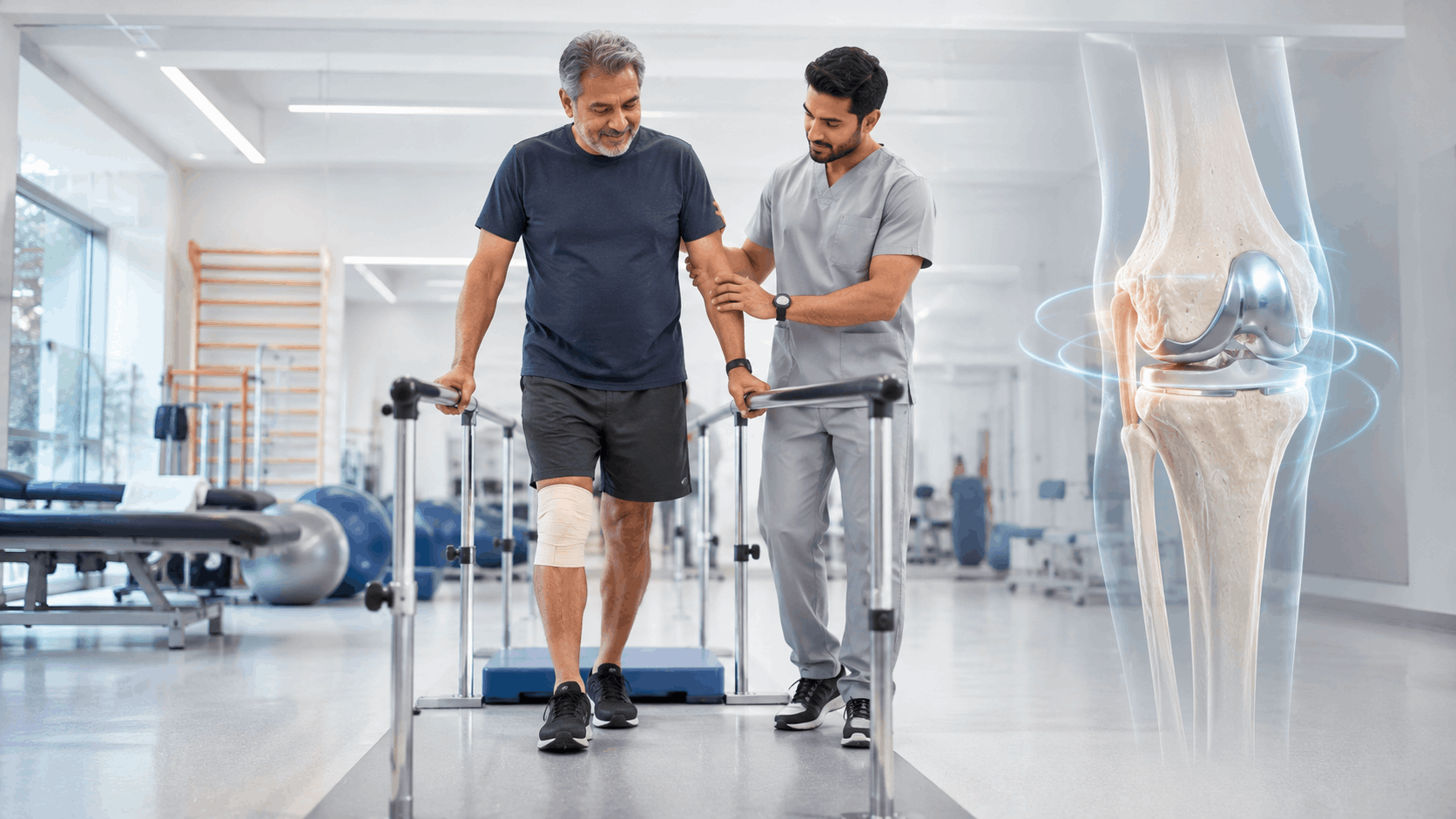
Recovering from Total Knee Replacement Surgery is a gradual process that requires patience, commitment, and proper rehabilitation. While the surgery itself is designed to relieve chronic knee pain and restore joint function, the recovery period plays an equally important role in achieving long-term success.
Every patient's recovery journey is unique and depends on factors such as age, overall health, fitness level, the severity of joint damage, and dedication to physiotherapy. Understanding what to expect each week after surgery can help reduce anxiety, set realistic expectations, and encourage a smoother recovery.
If you are preparing for knee replacement surgery or supporting a loved one through recovery, this week-by-week guide will help you understand the milestones you can expect during the healing process.
The first few hours after Total Knee Replacement Surgery are focused on pain management, monitoring, and early movement. Patients are closely observed while the effects of anesthesia wear off, and the medical team ensures that the new knee joint is functioning properly.
Most patients are encouraged to begin gentle ankle movements and simple leg exercises shortly after surgery. Early movement helps improve blood circulation, reduces the risk of blood clots, and promotes faster healing.
Pain, swelling, and stiffness are completely normal during this stage and are managed with medications, ice therapy, and physiotherapy.
The first week is one of the most important phases of recovery. During this time, patients gradually begin standing and walking with the help of a walker or support device under the supervision of physiotherapists.
The primary goals during the first week include controlling pain, reducing swelling, improving knee movement, and safely performing basic daily activities.
Patients are encouraged to:
Although discomfort is expected, most patients notice gradual improvement with consistent rehabilitation.
By the second week, many patients begin feeling more comfortable with walking and everyday movements. Swelling usually starts to decrease, and knee flexibility gradually improves.
The focus during this stage is to increase walking distance, improve muscle strength, and regain independence in performing routine activities such as dressing, using stairs with assistance, and moving around the home safely.
Regular physiotherapy remains essential, as it helps restore knee mobility and strengthens the muscles supporting the joint.
During the third and fourth weeks, most patients experience noticeable improvements in pain and movement. Walking becomes easier, and many individuals begin relying less on walking aids.
Rehabilitation exercises become more advanced to improve balance, flexibility, and muscle strength. Daily activities such as standing, cooking, or light household tasks often become easier during this period.
Although progress varies from person to person, consistency with physiotherapy remains one of the biggest factors influencing successful recovery.
By the fifth and sixth weeks, many patients are able to perform most daily activities with minimal discomfort. Knee flexibility continues to improve, and walking becomes more natural.
Patients often begin returning to office-based work if their job does not involve heavy physical activity. Driving may also become possible after medical clearance, depending on which knee was operated on and overall recovery progress.
While activity levels increase, it is still important to avoid high-impact movements that place excessive stress on the new joint.
The second and third months after surgery focus on rebuilding strength, endurance, and confidence. Patients usually continue structured physiotherapy while gradually increasing their daily activity levels.
Many individuals can comfortably enjoy activities such as:
Most patients notice significant pain relief compared to their condition before surgery, allowing them to enjoy a much more active lifestyle.
Between three and six months after Total Knee Replacement Surgery, the knee continues to strengthen and function more naturally. Swelling continues to reduce, flexibility improves further, and daily activities become easier.
Many patients return to hobbies, travel, gardening, and recreational walking without experiencing the severe pain they previously lived with.
Although recovery is well advanced at this stage, following exercise recommendations and maintaining a healthy lifestyle remain essential for protecting the new knee joint.
Recovery is influenced not only by the surgery but also by how well patients follow their rehabilitation program.
To achieve the best possible outcome:
Small, consistent improvements each day often lead to excellent long-term results.
Although most recoveries progress smoothly, certain symptoms should never be ignored.
Contact your orthopedic surgeon immediately if you experience:
Prompt medical attention helps prevent complications and supports a safer recovery.
Successful knee replacement is not only about the surgery itself but also about comprehensive care before, during, and after the procedure. Dr. Praveen Reddy provides personalized treatment plans designed to maximize recovery and improve long-term joint function.
Using modern surgical techniques and evidence-based rehabilitation protocols, he focuses on helping patients recover safely while achieving lasting pain relief and improved mobility.
His expertise includes Total Knee Replacement Surgery, arthroscopy, sports injury treatment, fracture management, trauma care, and comprehensive orthopedic services.
Patients requiring complete orthopedic evaluation may also benefit from Orthopedic Services. Those experiencing chronic knee pain before considering surgery can explore Knee Pain Treatment, while patients with ligament injuries may benefit from Arthroscopy Surgery.
How long does it take to recover from Total Knee Replacement Surgery?
Most patients resume normal daily activities within 6 to 12 weeks. Complete recovery and maximum improvement may take between six months and one year.
When can I walk after knee replacement surgery?
Most patients begin standing and walking with assistance within 24 hours after surgery under the guidance of a physiotherapist.
Is swelling normal after knee replacement?
Yes. Swelling is common during the first few weeks and gradually improves with exercise, elevation, and ice therapy.
When can I drive after surgery?
Many patients can resume driving after four to six weeks, depending on recovery progress and approval from their orthopedic surgeon.
Will I need physiotherapy after surgery?
Yes. Physiotherapy is one of the most important parts of recovery and helps improve strength, flexibility, balance, and overall knee function.
Recovery after Total Knee Replacement Surgery is a gradual journey that requires patience, dedication, and consistent rehabilitation. Understanding the recovery timeline helps patients prepare for each stage with confidence and realistic expectations.
With expert surgical care, structured physiotherapy, and proper follow-up, most patients experience significant pain relief, improved mobility, and a better quality of life.
If you are considering Total Knee Replacement Surgery or would like to understand your treatment options, schedule a consultation with Dr. Praveen Reddy for a comprehensive orthopedic evaluation and personalized care plan.