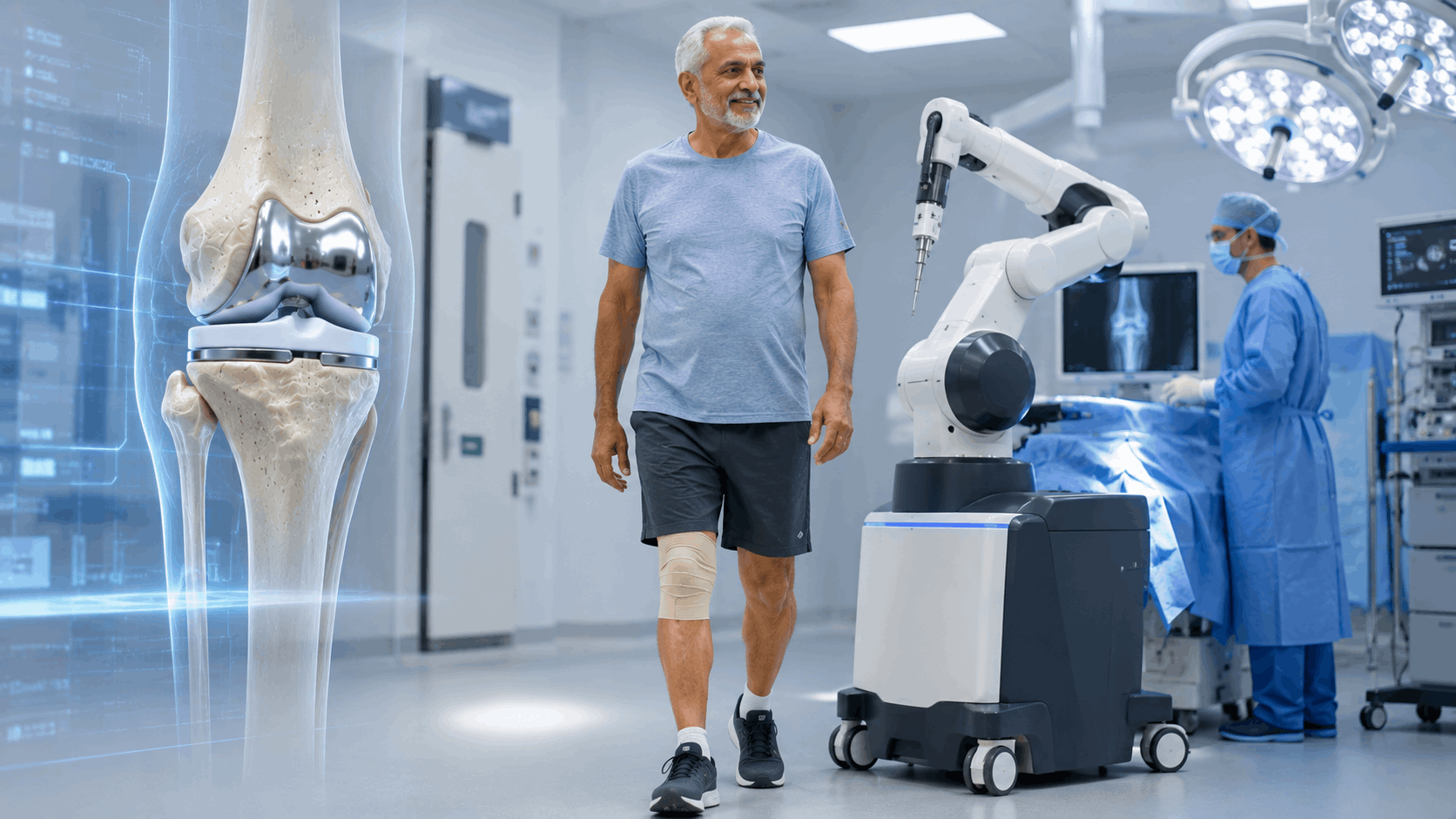
Chronic knee pain is one of the most common health concerns among senior citizens. As people age, the knee joints naturally undergo wear and tear, making everyday activities such as walking, climbing stairs, standing for long periods, or getting out of a chair increasingly difficult. Osteoarthritis is the leading cause of knee pain in older adults and, when left untreated, can significantly reduce mobility and independence.
While medications, physiotherapy, and lifestyle modifications can help manage symptoms in the early stages, advanced arthritis often requires surgical treatment. Today, one of the most significant advancements in orthopedic care is Robotic Knee Replacement Surgery, a technology that helps surgeons perform knee replacement procedures with greater precision and personalized planning.
Many older adults and their families have concerns about robotic surgery, wondering whether it is safe, how it works, and what recovery is like. Understanding the procedure and knowing what to expect can help patients make informed decisions with confidence.
Dr. Praveen Reddy provides comprehensive evaluation and advanced knee replacement treatment, including robotic-assisted techniques where appropriate, helping senior citizens regain mobility and improve their quality of life.
Robotic Knee Replacement Surgery is an advanced form of Total Knee Replacement Surgery that uses robotic-assisted technology to help the orthopedic surgeon plan and perform the procedure with exceptional accuracy.
It is important to understand that the robot does not perform the surgery independently. The procedure is carried out entirely by the orthopedic surgeon, while the robotic system provides detailed three-dimensional planning, real-time guidance, and enhanced precision throughout the operation.
This technology allows the surgeon to customize the procedure according to the patient's unique knee anatomy, helping achieve optimal implant positioning and better joint alignment.
As we age, the knee joint often becomes affected by arthritis, cartilage loss, reduced flexibility, and bone deformities. These changes can make walking painful and significantly limit daily activities.
Robotic-assisted surgery offers several advantages for carefully selected senior patients because it allows for highly accurate surgical planning and implant placement. Greater precision may help improve knee function, reduce soft tissue disruption, and support a smoother recovery.
For older adults who wish to remain active and independent, restoring comfortable movement can have a significant positive impact on overall health and quality of life.
Not every patient with knee pain requires surgery. Orthopedic specialists usually recommend conservative treatments before considering knee replacement.
However, robotic knee replacement may be considered when patients experience:
A comprehensive orthopedic evaluation helps determine whether robotic-assisted knee replacement is the most appropriate treatment option.
One of the biggest advantages of robotic-assisted surgery is the personalized surgical planning performed before the operation.
Advanced imaging studies are used to create a detailed three-dimensional model of the patient's knee. This allows the surgeon to carefully evaluate joint alignment, bone structure, ligament balance, and implant positioning before surgery even begins.
During the procedure, the robotic system continuously provides real-time information that assists the surgeon in performing highly accurate bone preparation while preserving healthy tissue whenever possible.
The orthopedic surgeon remains in complete control throughout every stage of the operation.
Robotic knee replacement is performed in a modern operating theater under spinal or general anesthesia, depending on the patient's overall health and medical condition.
The surgery generally takes one to two hours. During the procedure, damaged cartilage and worn-out bone surfaces are removed and replaced with high-quality artificial knee implants designed to restore smooth movement and joint stability.
Following surgery, patients are monitored closely while the anesthesia wears off. Pain management begins immediately, and early rehabilitation is started as soon as it is medically appropriate.
Recovery is an important part of achieving successful long-term results. While every patient's recovery is different, many senior citizens begin standing and walking with assistance within the first day after surgery.
Physiotherapy starts early and focuses on restoring movement, strengthening muscles, and improving walking ability. Most patients gradually increase their activity level over the following weeks while continuing rehabilitation exercises at home.
Walking, climbing stairs, and performing everyday activities generally become easier as strength and flexibility improve. Following the rehabilitation program consistently is one of the most important factors in achieving the best outcome.
Robotic-assisted technology has become increasingly popular because of its ability to improve surgical precision and personalize treatment for each patient.
Potential benefits may include:
Individual outcomes vary, and your orthopedic surgeon will discuss the expected benefits based on your specific condition.
Yes. For appropriately selected patients, robotic-assisted knee replacement is considered a safe and effective procedure when performed by an experienced orthopedic surgeon.
Before recommending surgery, the patient's overall health, medical history, heart function, diabetes, blood pressure, and other medical conditions are carefully evaluated. This comprehensive assessment helps ensure that surgery is performed safely while minimizing potential risks.
Age alone is not the deciding factor. Overall health and functional status are much more important when determining whether surgery is appropriate.
Choosing the right orthopedic surgeon is one of the most important decisions for successful treatment and recovery. Dr. Praveen Reddy provides advanced orthopedic care with a strong emphasis on accurate diagnosis, personalized treatment planning, and patient-centered care.
Every patient receives a detailed evaluation before surgery, allowing treatment decisions to be tailored according to their medical condition, lifestyle, mobility goals, and overall health.
His expertise includes Total Knee Replacement Surgery, robotic-assisted knee replacement, arthroscopy, sports injury treatment, fracture management, trauma care, and comprehensive orthopedic services.
Patients may also benefit from Total Knee Replacement Surgery, Walking After Knee Replacement Surgery and Orthopedic Services for complete orthopedic care.
Is robotic knee replacement performed entirely by a robot?
No. The orthopedic surgeon performs the entire procedure. The robotic system provides advanced planning and real-time guidance to assist the surgeon throughout the operation.
Is robotic knee replacement better than traditional surgery?
Robotic-assisted surgery allows greater surgical precision and personalized planning. The most appropriate technique depends on the patient's condition and should be discussed with an experienced orthopedic surgeon.
Can senior citizens safely undergo robotic knee replacement?
Yes. Many older adults successfully undergo robotic-assisted knee replacement after a comprehensive medical evaluation confirms they are suitable candidates.
How long does recovery take after robotic knee replacement?
Most patients begin walking with assistance within one day after surgery. Recovery continues over several weeks and months with physiotherapy and rehabilitation.
How long do robotic knee replacement implants last?
Modern knee implants often last 15 to 20 years or longer, depending on factors such as age, activity level, body weight, and overall health.
Robotic Knee Replacement Surgery represents a significant advancement in orthopedic care, offering senior citizens a highly precise and personalized approach to treating severe knee arthritis. For many patients, the procedure provides lasting pain relief, improved mobility, and the opportunity to return to a more active and independent lifestyle.
If persistent knee pain is affecting your daily activities and conservative treatments are no longer providing relief, consult Dr. Praveen Reddy for a comprehensive orthopedic evaluation. With advanced surgical expertise and patient-focused care, he can help determine the most appropriate treatment plan for your long-term joint health.