Hip replacement surgery can provide significant relief for people living with severe hip arthritis, joint damage, or chronic hip pain. However, surgery is only one part of the treatment journey. A well-planned recovery is equally important for restoring strength, improving movement, and returning to everyday activities.
Many patients have questions about what happens after hip replacement surgery. They may want to know when they can walk, how long pain and swelling will last, when they can return to work, and how soon they can drive or exercise. While recovery varies from person to person, understanding the typical recovery process can help patients prepare physically and mentally.
Modern hip replacement techniques, improved pain management, and early physiotherapy allow many patients to begin moving soon after surgery. With proper rehabilitation and guidance from an experienced orthopedic surgeon, most patients gradually regain independence and return to an active lifestyle.
Dr. Praveen Reddy provides comprehensive orthopedic care and personalized treatment plans for patients undergoing hip replacement surgery, with a focus on safe recovery, improved mobility, and long-term joint function.
The recovery process begins as soon as the surgery is completed. Patients are monitored in the recovery area while the effects of anesthesia wear off. Pain management is started early to keep discomfort under control.
In many cases, patients are encouraged to begin gentle movement and walking with assistance within the first day after surgery. A physiotherapist may guide you through simple exercises designed to improve circulation, reduce stiffness, and activate the muscles around the hip.
Some pain, swelling, bruising, and stiffness are expected during the early stages of recovery. These symptoms usually improve gradually as the tissues heal.
One of the most important milestones after hip replacement is being able to walk safely and confidently.
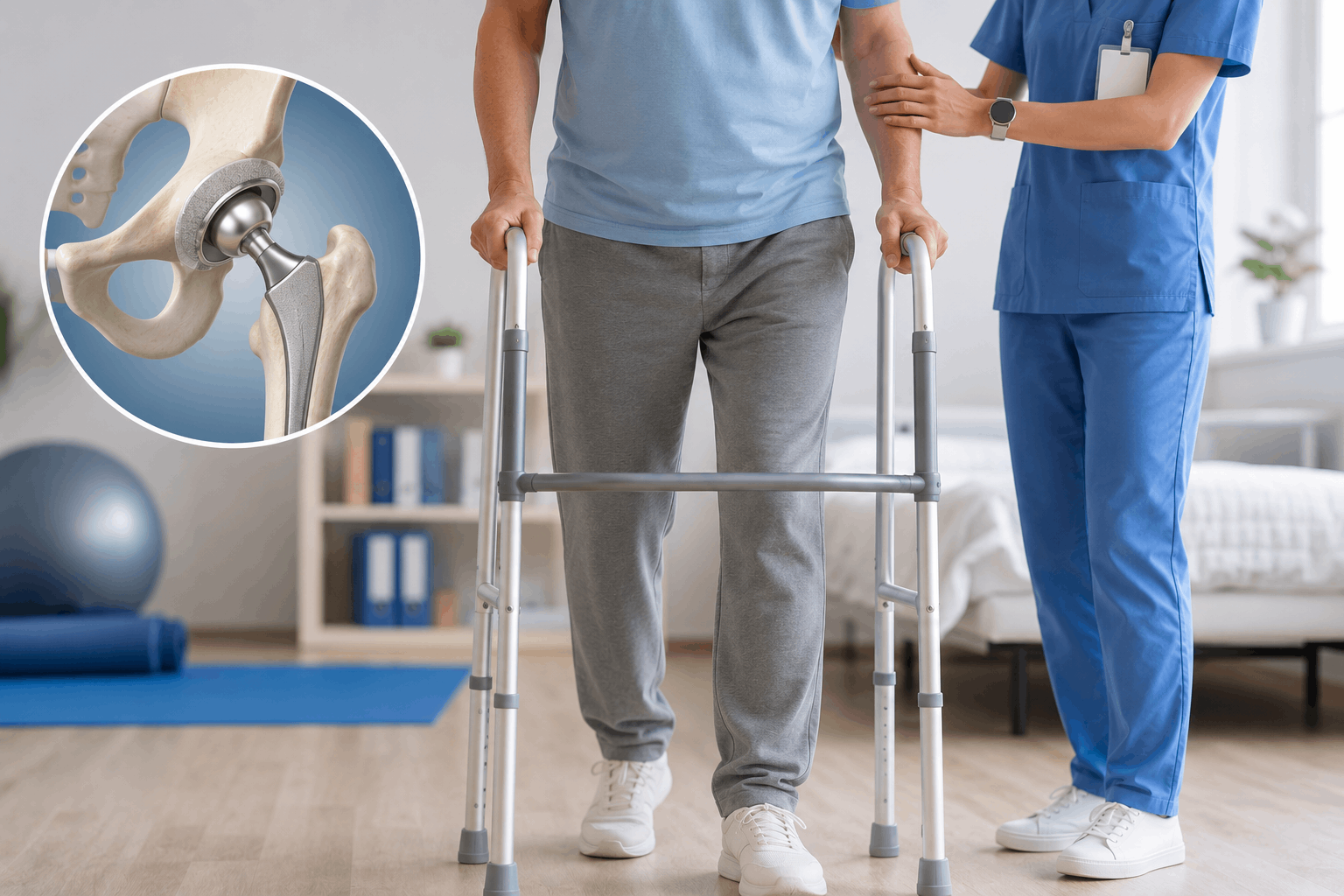
Most patients begin walking with the help of a walker, crutches, or another support device during the first day or shortly after surgery. Initially, walking distances are short, and the focus is on maintaining balance and using the new hip safely.
As strength and confidence improve, the need for walking support gradually decreases. Some patients transition from a walker to a cane before eventually walking independently.
Your recovery speed depends on factors such as age, general health, muscle strength, the condition of the hip before surgery, and commitment to rehabilitation.
Every patient's recovery is different, but a general timeline can help you understand what to expect.
During the first week, the main goals are pain control, wound care, safe walking, and beginning physiotherapy. Patients usually perform gentle exercises and take short walks several times throughout the day.
It is normal to feel tired during this stage. Rest is important, but prolonged inactivity should generally be avoided unless specifically advised by your medical team.
During the second to fourth weeks, walking usually becomes easier. Swelling and discomfort gradually decrease, while hip strength and flexibility begin to improve.
Patients often become more independent with activities such as dressing, bathing, moving around the house, and preparing simple meals. Physiotherapy continues to focus on strengthening the muscles around the hip and improving balance.
By four to six weeks, many patients can walk more comfortably and perform a greater number of daily activities. Depending on recovery progress and the nature of their work, some patients may begin returning to desk-based jobs.
Driving may also become possible around this stage for some patients, but this should only be done after receiving medical clearance and when you can safely control the vehicle.
Between six and twelve weeks, many patients experience substantial improvement in mobility and pain. Walking distances can gradually increase, and patients may return to many normal activities.
Low-impact activities such as walking, swimming, and stationary cycling may be introduced when approved by the orthopedic surgeon.
Although many daily activities become easier during this period, full recovery can continue for several additional months.
Physiotherapy is one of the most important components of hip replacement recovery. Surgery replaces the damaged joint, but rehabilitation helps restore the strength, flexibility, balance, and movement needed to use the new joint effectively.
Your physiotherapist may recommend exercises that target the hip and surrounding muscles. These exercises gradually become more challenging as strength improves.
Following your prescribed rehabilitation program consistently can help improve walking ability, reduce stiffness, and support a safe return to normal activities.
Pain and swelling are common during the first few weeks after hip replacement surgery. Your orthopedic team will provide appropriate pain management based on your individual condition.
Resting when needed, following prescribed medications, and gradually increasing activity can help manage discomfort. Elevating the leg and using cold therapy may also help reduce swelling when recommended by your medical team.
Pain should gradually improve over time. Increasing or severe pain should be reported to your orthopedic surgeon.
Finding a comfortable sleeping position can be difficult during the early recovery period. Your surgeon or physiotherapist can guide you regarding the safest sleeping position based on the surgical approach and your individual recovery.
Using supportive pillows and maintaining a comfortable position can help reduce pressure on the hip. Avoid changing your sleeping position against medical advice during the early stages of healing.
As recovery progresses, most patients gradually return to their preferred sleeping positions.
The time required to return to work depends largely on the type of job you have.
People with desk-based jobs may return to work within several weeks if their recovery is progressing well. Jobs that require prolonged standing, walking, lifting, climbing, or physical labor may require a longer recovery period.
Your orthopedic surgeon can provide individualized advice based on your recovery and the physical demands of your occupation.
Regular physical activity is important for maintaining muscle strength and supporting long-term hip function after recovery.
Low-impact activities such as walking, swimming, cycling, and selected strengthening exercises are generally preferred after hip replacement. These activities provide fitness benefits without placing excessive stress on the artificial joint.
High-impact activities involving repeated jumping, running, or sudden twisting may not be appropriate for everyone. Always discuss your desired activities with your orthopedic surgeon before returning to them.
Maintaining a healthy body weight is beneficial after hip replacement because excess weight can place additional stress on the artificial joint and surrounding structures.
A balanced diet combined with appropriate physical activity can support recovery, maintain muscle strength, and promote overall health.
Patients should focus on gradual, sustainable lifestyle improvements rather than rapid weight-loss approaches during the recovery period.
Your orthopedic surgeon may recommend certain precautions during the early recovery period to protect the healing joint. The exact precautions depend on factors such as the surgical approach, implant type, and individual recovery.
Patients should follow all instructions regarding sitting positions, bending, sleeping, walking, and physical activity. Using appropriate assistive devices and following physiotherapy recommendations can reduce the risk of falls and other complications.
As healing progresses, many temporary restrictions can gradually be relaxed under medical guidance.
Most patients recover without major complications, but certain symptoms require prompt medical attention.
Contact your orthopedic surgeon if you experience:
Prompt evaluation can help identify and treat potential complications early.
Hip replacement is designed to provide long-term pain relief and improved mobility. Once recovery is complete, many patients return to activities they previously avoided because of hip pain.
Patients often find that walking, traveling, climbing stairs, shopping, and participating in low-impact recreational activities become significantly easier.
Maintaining an active lifestyle, following medical advice, managing body weight, and attending recommended follow-up appointments can help protect the artificial joint and support long-term results.
Choosing an experienced orthopedic surgeon is an important part of achieving a successful outcome. Dr. Praveen Reddy provides comprehensive orthopedic care using modern surgical techniques, advanced diagnostic methods, and personalized treatment planning.
Every patient's treatment plan is based on their symptoms, joint condition, overall health, lifestyle, and recovery goals. From diagnosis and surgical planning to rehabilitation and follow-up, the focus remains on safe recovery and restoration of mobility.
His areas of expertise include Total Hip Replacement Surgery, Total Knee Replacement Surgery, arthroscopy, sports injury treatment, fracture management, trauma care, and comprehensive orthopedic services.
Patients can also explore Total Hip Replacement Surgery, Hip Arthritis Treatment and Orthopedic Services for additional information about orthopedic treatment options.
How long does it take to recover from hip replacement surgery?
Many patients return to routine activities within six to twelve weeks, although complete recovery can continue for several months. Recovery depends on age, overall health, muscle strength, and rehabilitation progress.
When can I walk after hip replacement surgery?
Most patients begin standing and walking with assistance within the first day after surgery, provided they are medically stable.
When can I drive after hip replacement surgery?
Some patients may be able to drive after several weeks, but the exact timing depends on recovery, pain control, mobility, and medical clearance. You should be able to safely control the vehicle before returning to driving.
How long will I need physiotherapy?
The duration varies between patients. Some require several weeks of structured physiotherapy, while others may need longer rehabilitation depending on strength and mobility.
Can I exercise after hip replacement surgery?
Yes. Low-impact activities such as walking, swimming, and cycling are often encouraged after adequate healing and medical clearance. High-impact activities should be discussed with your orthopedic surgeon.
Recovery after hip replacement surgery is a gradual process that requires patience, regular movement, and commitment to rehabilitation. Although the recovery timeline differs from one patient to another, most people experience steady improvements in pain, strength, walking ability, and independence over the weeks and months following surgery.
Following your orthopedic surgeon's instructions, attending physiotherapy, maintaining a healthy lifestyle, and recognizing warning signs can help support a safe and successful recovery.
If chronic hip pain is affecting your mobility or quality of life, consult Dr. Praveen Reddy for a comprehensive orthopedic evaluation and personalized treatment plan. With advanced orthopedic care and structured recovery guidance, patients can work toward improved mobility, lasting pain relief, and a more active lifestyle.