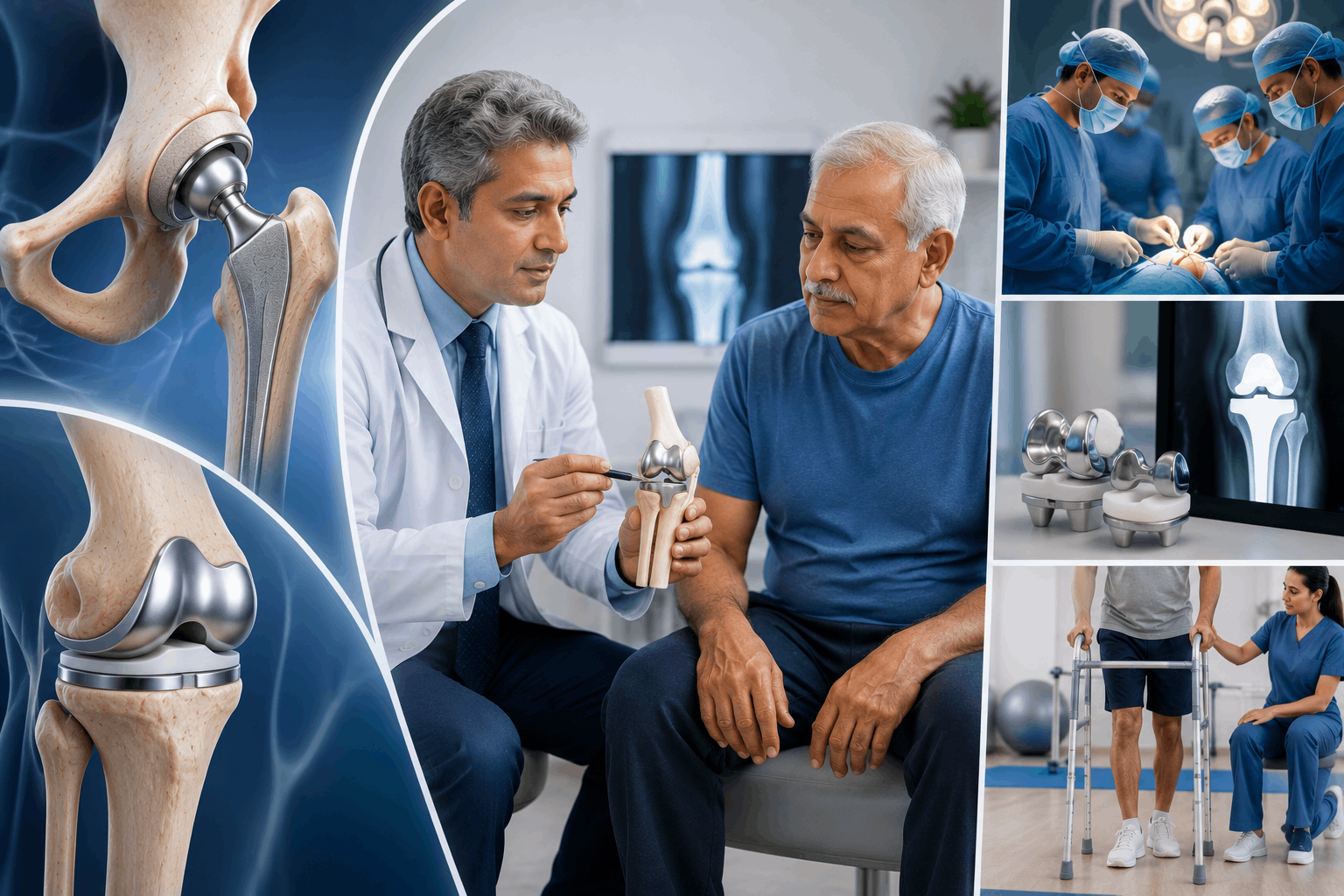
Joint pain can gradually affect almost every part of daily life. Walking, climbing stairs, standing, exercising, working, and even sleeping can become difficult when a joint is severely damaged. While medicines, physiotherapy, lifestyle changes, and other non-surgical treatments can help many patients, advanced joint damage may eventually require surgery.
Joint Replacement Surgery is a well-established orthopedic procedure designed to replace a damaged joint with an artificial implant. It is commonly performed for the knee and hip, although replacement surgery can also be performed on other joints in selected patients. The primary goals are to reduce chronic pain, restore movement, improve stability, and help patients return to everyday activities.
If you or a family member has been advised to consider joint replacement, understanding the procedure, reasons for surgery, recovery, risks, and long-term results can make the treatment journey easier to navigate. Dr. Praveen Reddy provides comprehensive orthopedic evaluation and personalized treatment plans based on each patient's condition, lifestyle, and recovery goals.
Joint Replacement Surgery involves removing damaged portions of a joint and replacing them with artificial components designed to restore smooth movement and function.
The procedure is most commonly performed when the cartilage covering the joint surfaces has become severely damaged. Without healthy cartilage, bones can rub against each other, causing pain, stiffness, inflammation, and restricted movement.
During replacement surgery, the damaged surfaces are carefully removed and replaced with implants made from medical-grade materials. The exact implant design and surgical technique depend on the joint being replaced and the patient's individual anatomy.
Joint replacement is most commonly associated with the knee and hip. These are major weight-bearing joints that are particularly vulnerable to arthritis and long-term wear.
Total Knee Replacement is commonly recommended for patients with advanced knee arthritis or severe joint damage. The damaged surfaces of the knee are replaced with artificial components designed to restore stability and movement.
Patients with severe knee pain may also be evaluated for Total Knee Replacement Surgery when non-surgical treatments no longer provide adequate relief.
Total Hip Replacement is used to treat severe arthritis, avascular necrosis, fractures, and other conditions that damage the hip joint. The damaged ball and socket are replaced with artificial components to restore comfortable movement.
Patients experiencing persistent hip pain can learn more about Total Hip Replacement Surgery and the available treatment options.
The most common reason for joint replacement is advanced arthritis. Osteoarthritis gradually wears away the protective cartilage within the joint, resulting in pain, stiffness, and reduced mobility.
Other conditions that may lead to joint replacement include rheumatoid arthritis, post-traumatic arthritis, severe fractures, avascular necrosis, congenital joint abnormalities, and significant cartilage damage.
Joint replacement is generally considered when joint damage has become severe enough to significantly affect quality of life and conservative treatments are no longer providing sufficient relief.
Not every patient with joint pain needs surgery. However, certain symptoms suggest that it may be time for an orthopedic evaluation.
Common warning signs include:
The decision to undergo surgery should be based on a comprehensive evaluation rather than symptoms alone.
Orthopedic specialists generally recommend trying appropriate non-surgical treatments before considering joint replacement. Depending on the condition, these may include medications, physiotherapy, exercise, weight management, activity modification, injections, and other conservative approaches.
If these treatments no longer provide adequate relief and pain continues to interfere with your daily life, joint replacement may be considered.
The timing of surgery is individualized. Waiting until pain becomes unbearable is not always necessary, particularly if mobility and independence are already being significantly affected.
The exact procedure depends on the joint being replaced, but the basic principle is similar.
Before surgery, the orthopedic surgeon performs a detailed assessment and uses imaging studies such as X-rays or other scans to understand the extent of joint damage and plan the procedure.
During surgery, the damaged bone and cartilage are carefully removed. Artificial components are then positioned to recreate the joint's normal movement and stability.
The surgeon checks the alignment, stability, and movement of the new joint before closing the surgical incision.
Modern surgical techniques, anesthesia, infection prevention, and pain-management protocols have made joint replacement safer and more predictable for appropriately selected patients.
Preparation is an important part of successful treatment. Your orthopedic surgeon will review your medical history, current medications, previous surgeries, allergies, and other health conditions.
Depending on your age and medical history, blood tests, heart evaluation, imaging, and other investigations may be recommended before surgery.
Patients may also be advised to improve their physical fitness, manage their weight, control existing medical conditions, and stop smoking before surgery where applicable.
Understanding the recovery process in advance can also help patients prepare their home and arrange assistance during the early recovery period.
Recovery begins soon after surgery. Early movement is encouraged when medically appropriate because it helps improve circulation, reduce stiffness, and restore muscle function.
Most patients begin standing and walking with assistance under the supervision of a physiotherapist. Rehabilitation focuses on improving strength, flexibility, balance, and joint function.
Recovery varies depending on the joint replaced, age, general health, muscle strength, and commitment to physiotherapy. Many patients gradually return to routine activities over several weeks, while complete recovery can continue for several months.
Following the rehabilitation program consistently is one of the most important factors in achieving a successful outcome.
For patients with advanced joint damage, replacement surgery can provide significant improvements in both physical function and quality of life.
The main benefits may include:
The extent of improvement depends on the patient's condition and overall health.
Once recovery is complete, most patients can return to many everyday activities. Walking, swimming, cycling, traveling, and other low-impact activities are generally compatible with a healthy artificial joint.
Patients should gradually increase activity and follow their orthopedic surgeon's recommendations. High-impact activities involving repeated jumping, running, or significant twisting may not be appropriate for everyone.
Maintaining a healthy weight and staying physically active with joint-friendly exercises can help support long-term implant function.
Modern joint replacement implants are designed to be durable and provide long-term function. Many knee and hip replacement implants can last 15 to 20 years or longer, although the exact lifespan varies between patients.
Factors such as age, body weight, activity level, implant design, surgical technique, and overall health can influence implant longevity.
Regular follow-up appointments allow your orthopedic surgeon to monitor the joint and identify potential problems early.
Joint replacement surgery is generally safe, but like any major operation, it carries potential risks.
Possible complications include infection, blood clots, bleeding, implant loosening, dislocation in hip replacement, fractures, nerve or blood-vessel injury, and stiffness.
The risk varies depending on the patient's health and the type of surgery. Careful pre-operative assessment, appropriate surgical planning, modern infection-prevention measures, and following post-operative instructions can help reduce complications.
Patients should discuss their individual risks and expected benefits with their orthopedic surgeon before surgery.
Choosing an experienced orthopedic surgeon is an important part of achieving a successful joint replacement outcome. Dr. Praveen Reddy provides comprehensive orthopedic care with an emphasis on accurate diagnosis, personalized treatment planning, and modern surgical techniques.
Every patient is evaluated individually based on their symptoms, imaging findings, overall health, lifestyle, and long-term goals. Whenever appropriate, non-surgical options are considered before recommending surgery.
His areas of expertise include knee replacement, hip replacement, arthroscopy, sports injury treatment, fracture management, trauma care, and comprehensive orthopedic services.
Patients can also explore Orthopedic Services for a broader understanding of available orthopedic treatments.
Is joint replacement surgery only for older adults?
No. Age alone does not determine whether a patient needs joint replacement. The decision depends on the severity of joint damage, pain, mobility limitations, overall health, and response to other treatments.
How do I know if I need joint replacement surgery?
Persistent pain, significant mobility problems, joint stiffness, sleep disturbance, and failure of appropriate non-surgical treatments may indicate that joint replacement should be considered.
Is joint replacement surgery painful?
Some discomfort is expected during the early recovery period, but modern anesthesia and pain-management techniques help control postoperative pain. As healing progresses, patients typically experience substantial relief from their original joint pain.
How long does it take to recover from joint replacement surgery?
Many patients return to routine activities within several weeks, but recovery varies depending on the joint replaced and individual health. Complete recovery and strengthening may take several months.
Can I exercise after joint replacement surgery?
Yes. Low-impact activities such as walking, swimming, cycling, and appropriate strengthening exercises are generally encouraged after recovery and medical clearance.
How long does a joint replacement last?
Many modern knee and hip implants provide 15 to 20 years or more of reliable function. Longevity varies according to the patient's age, activity level, body weight, implant, and overall health.
Joint Replacement Surgery can be a life-changing treatment for patients suffering from severe arthritis and advanced joint damage. By replacing damaged joint surfaces with durable artificial components, the procedure can significantly reduce pain, restore mobility, and help patients regain independence.
However, surgery is not the first option for every patient. A detailed orthopedic evaluation is essential to determine whether joint replacement is appropriate and which treatment approach is best for your condition.
If persistent knee or hip pain is affecting your daily life and conservative treatments are no longer providing adequate relief, consult Dr. Praveen Reddy for a comprehensive orthopedic evaluation and personalized treatment plan. With advanced orthopedic care and structured rehabilitation, patients can work toward lasting pain relief, improved mobility, and a more active lifestyle.