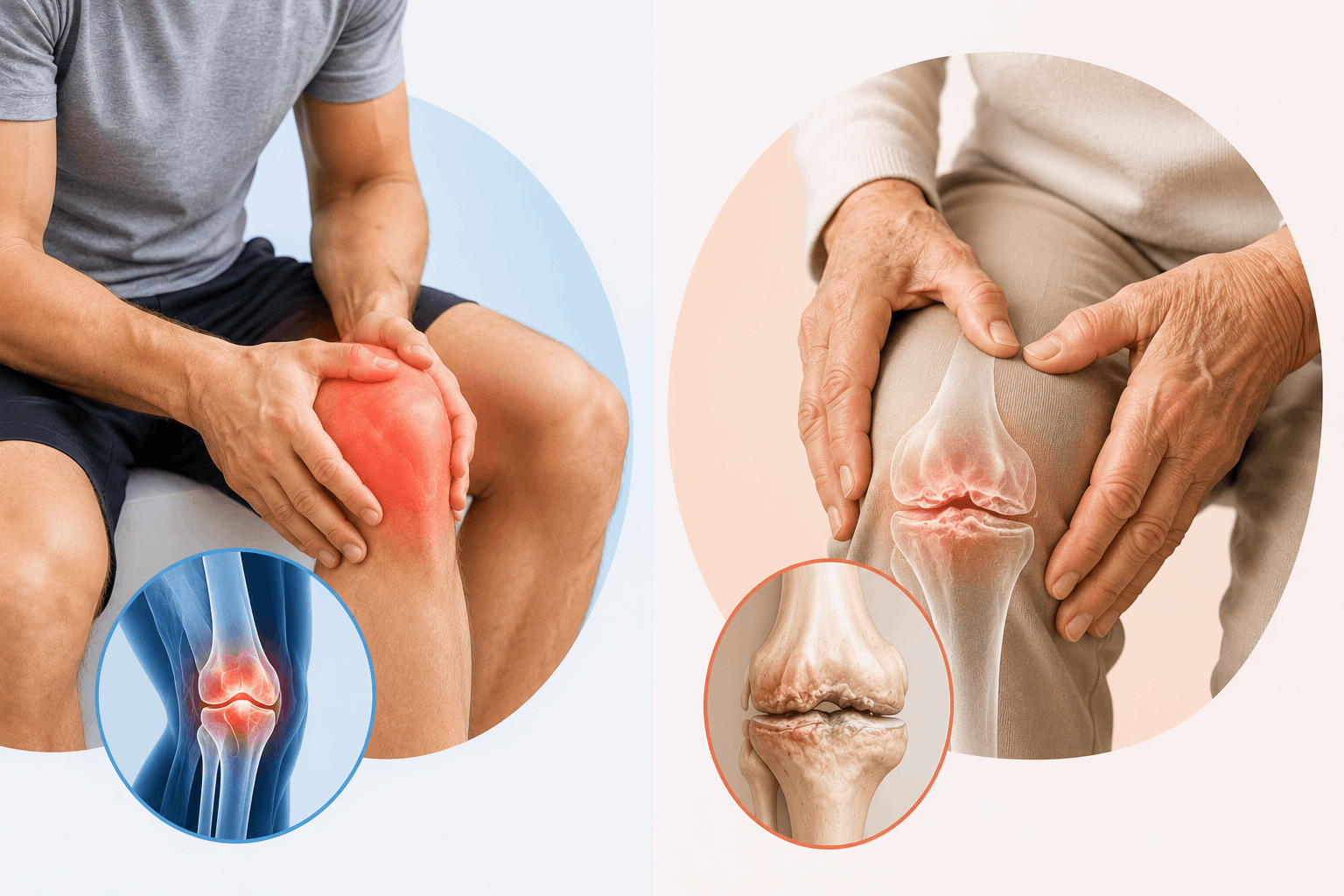
Joint pain and arthritis are terms that are often used interchangeably, but they do not mean the same thing. Joint pain is a symptom, while arthritis refers to a group of conditions that can cause inflammation, cartilage damage, stiffness, and pain in one or more joints. Understanding the difference can help patients recognize when occasional discomfort may need medical attention.
Joint pain can occur after an injury, excessive physical activity, muscle strain, or temporary inflammation. Arthritis, on the other hand, can develop because of age-related wear and tear, autoimmune conditions, previous injuries, or other underlying problems. Some forms of arthritis can gradually worsen and affect mobility if they are not appropriately managed.
For patients experiencing ongoing knee, hip, shoulder, or other joint pain, identifying the underlying cause is important. Dr. Praveen Reddy provides comprehensive orthopedic evaluation and personalized treatment plans to help identify the source of joint symptoms and recommend appropriate treatment.
Joint pain refers to discomfort, aching, soreness, or pain experienced in or around a joint. It can affect almost any joint in the body, including the knees, hips, shoulders, elbows, wrists, and ankles.
Joint pain is a symptom rather than a specific diagnosis. There can be many possible causes, and the severity can range from mild temporary discomfort to persistent pain that significantly affects daily activities.
For example, knee pain after an intense workout may be caused by temporary overuse, while persistent knee pain accompanied by stiffness and reduced movement could be related to arthritis or another underlying joint condition.
Arthritis is a broad term used to describe more than 100 conditions that affect the joints. Different types of arthritis have different causes and can affect people of different ages.
Arthritis may cause pain, stiffness, swelling, reduced range of motion, and difficulty performing everyday activities. Some forms primarily involve gradual cartilage degeneration, while others are associated with inflammation or autoimmune processes.
The most common types include osteoarthritis, rheumatoid arthritis, gout, and arthritis related to previous injuries.
The simplest way to understand the difference is that joint pain describes what you feel, while arthritis describes one possible underlying condition causing those symptoms.
A person can have joint pain without having arthritis. For example, a minor injury, temporary inflammation, overuse, or muscle strain can cause joint discomfort without permanent joint damage.
Similarly, a person can have arthritis with symptoms that vary over time. Some patients may experience mild symptoms during the early stages, while others develop persistent pain, stiffness, and mobility limitations as the condition progresses.
Joint pain can develop for many different reasons. Some causes are temporary, while others require medical treatment.
Common causes include:
Because joint pain has many possible causes, persistent symptoms should be properly evaluated rather than assumed to be arthritis.
Osteoarthritis is the most common form of arthritis. It develops when the protective cartilage covering the ends of bones gradually deteriorates.
It commonly affects the knees, hips, hands, and spine. As cartilage becomes thinner, the joint may become painful and stiff, particularly during movement.
Risk increases with age, although younger people can also develop osteoarthritis following injuries or because of structural abnormalities.
Rheumatoid arthritis is an autoimmune condition in which the immune system mistakenly attacks the lining of the joints. It can cause inflammation, pain, swelling, and stiffness.
Unlike osteoarthritis, rheumatoid arthritis can affect multiple joints and may cause prolonged morning stiffness. It requires appropriate medical management to control inflammation and reduce joint damage.
A previous fracture, ligament injury, dislocation, or other significant joint injury can increase the risk of arthritis later in life.
Damage caused by an injury can change the mechanics of the joint and accelerate cartilage deterioration.
Gout is caused by the accumulation of uric acid crystals within a joint. It can cause sudden and intense pain, swelling, warmth, and redness.
The big toe is commonly affected, although gout can involve other joints as well.
Although symptoms vary depending on the type of arthritis, several signs commonly occur.
These include persistent joint pain, stiffness after periods of rest, swelling, reduced range of motion, tenderness, and difficulty performing normal activities.
Patients with arthritis may also notice that symptoms gradually become more frequent or begin affecting multiple aspects of their daily routine.
Pain that consistently returns with activity or continues despite rest should be evaluated by a healthcare professional.
Temporary joint discomfort does not necessarily indicate a serious condition.
For example, mild soreness after an unfamiliar workout or physically demanding activity may improve with rest and appropriate self-care.
However, persistent or recurring pain should not simply be considered a normal part of aging.
You should consider an orthopedic evaluation if pain continues, becomes progressively worse, causes swelling or stiffness, affects sleep, or interferes with normal activities.
An orthopedic specialist can help determine whether joint pain is related to arthritis, an injury, or another underlying condition.
You should seek professional evaluation if you experience:
Early diagnosis can help identify appropriate treatment before symptoms significantly affect mobility.
Diagnosis begins with a detailed medical history and physical examination. Your doctor may ask when the pain began, what activities make it worse, whether there has been an injury, and whether you experience stiffness or swelling.
The affected joint is examined for movement, tenderness, strength, stability, and swelling.
Depending on the suspected cause, imaging such as X-rays, ultrasound, or MRI may be recommended. Blood tests may also be useful when inflammatory or autoimmune arthritis is suspected.
The goal is to identify the underlying cause rather than treating the symptom alone.
Treatment depends entirely on the cause and severity of the problem.
For temporary or mild joint pain, rest, activity modification, appropriate exercises, physiotherapy, and other conservative measures may be sufficient.
If an injury is responsible, treatment may involve physiotherapy, bracing, medications, or other orthopedic interventions.
For arthritis, treatment may include exercise, weight management, medications, physiotherapy, injections, and lifestyle modifications. Patients with advanced joint damage who continue to experience severe pain despite conservative treatment may eventually be considered for joint replacement surgery.
When arthritis becomes severe, joint damage can significantly affect mobility and quality of life. Patients may experience persistent pain, difficulty walking, joint stiffness, and problems performing routine activities.
In advanced cases, Total Knee Replacement Surgery or Total Hip Replacement Surgery may be considered depending on the affected joint and severity of damage.
The decision to undergo joint replacement should be based on symptoms, physical examination, imaging findings, overall health, and response to non-surgical treatment.
Not every type of arthritis can be prevented, particularly conditions influenced by genetics or autoimmune processes. However, certain lifestyle habits can help protect joint health and reduce some risk factors.
Maintaining a healthy body weight reduces stress on weight-bearing joints. Regular low-impact exercise helps maintain muscle strength and joint mobility. Avoiding unnecessary joint injuries and treating sports injuries appropriately may also reduce the risk of long-term joint problems.
A balanced diet and appropriate management of underlying health conditions can further support overall musculoskeletal health.
Accurately identifying the cause of joint pain is an important first step toward effective treatment. Dr. Praveen Reddy provides comprehensive orthopedic evaluation for patients experiencing joint pain, arthritis, sports injuries, and mobility problems.
Treatment is tailored to each patient's symptoms, imaging findings, lifestyle, medical history, and long-term goals. Whenever appropriate, conservative treatment options are considered before surgery.
His areas of expertise include knee and hip replacement, arthroscopy, sports injury treatment, fracture management, trauma care, and comprehensive orthopedic treatment.
Is joint pain the same as arthritis?
No. Joint pain is a symptom that can have many causes, while arthritis is a group of conditions that affect the joints. Arthritis can cause joint pain, but joint pain does not always mean that a person has arthritis.
How can I tell if my joint pain is arthritis?
Persistent pain accompanied by stiffness, swelling, reduced movement, or difficulty performing daily activities may indicate arthritis. However, symptoms alone cannot confirm the diagnosis. A medical evaluation and, when necessary, imaging or laboratory tests are used to identify the cause.
Can joint pain occur without arthritis?
Yes. Joint pain can result from injuries, overuse, muscle strain, ligament or tendon problems, inflammation, bursitis, and several other conditions without arthritis being present.
Is arthritis always caused by aging?
No. Although osteoarthritis becomes more common with age, arthritis can also result from autoimmune diseases, previous injuries, genetic factors, infections, or metabolic conditions. Younger people can develop arthritis as well.
Can arthritis be treated without surgery?
Yes. Many patients manage arthritis with exercise, physiotherapy, weight management, medications, activity modification, and other conservative treatments. Surgery may be considered when severe joint damage causes persistent symptoms despite appropriate non-surgical treatment.
When does arthritis require joint replacement surgery?
Joint replacement may be considered when arthritis has caused severe joint damage and persistent pain that significantly affects daily life, mobility, or sleep despite appropriate non-surgical treatment.
Joint pain and arthritis are closely related but should not be considered the same condition. Joint pain is a symptom with many possible causes, while arthritis represents a group of diseases that can damage or inflame the joints.
Understanding the difference can help you recognize persistent symptoms and seek appropriate medical evaluation. Early diagnosis often provides more opportunities for effective conservative treatment, while advanced arthritis may require surgical options such as joint replacement.
If ongoing knee, hip, or other joint pain is affecting your mobility or quality of life, consult Dr. Praveen Reddy for a comprehensive orthopedic evaluation. Identifying the cause of your symptoms is the first step toward choosing the right treatment and maintaining healthy, comfortable movement.