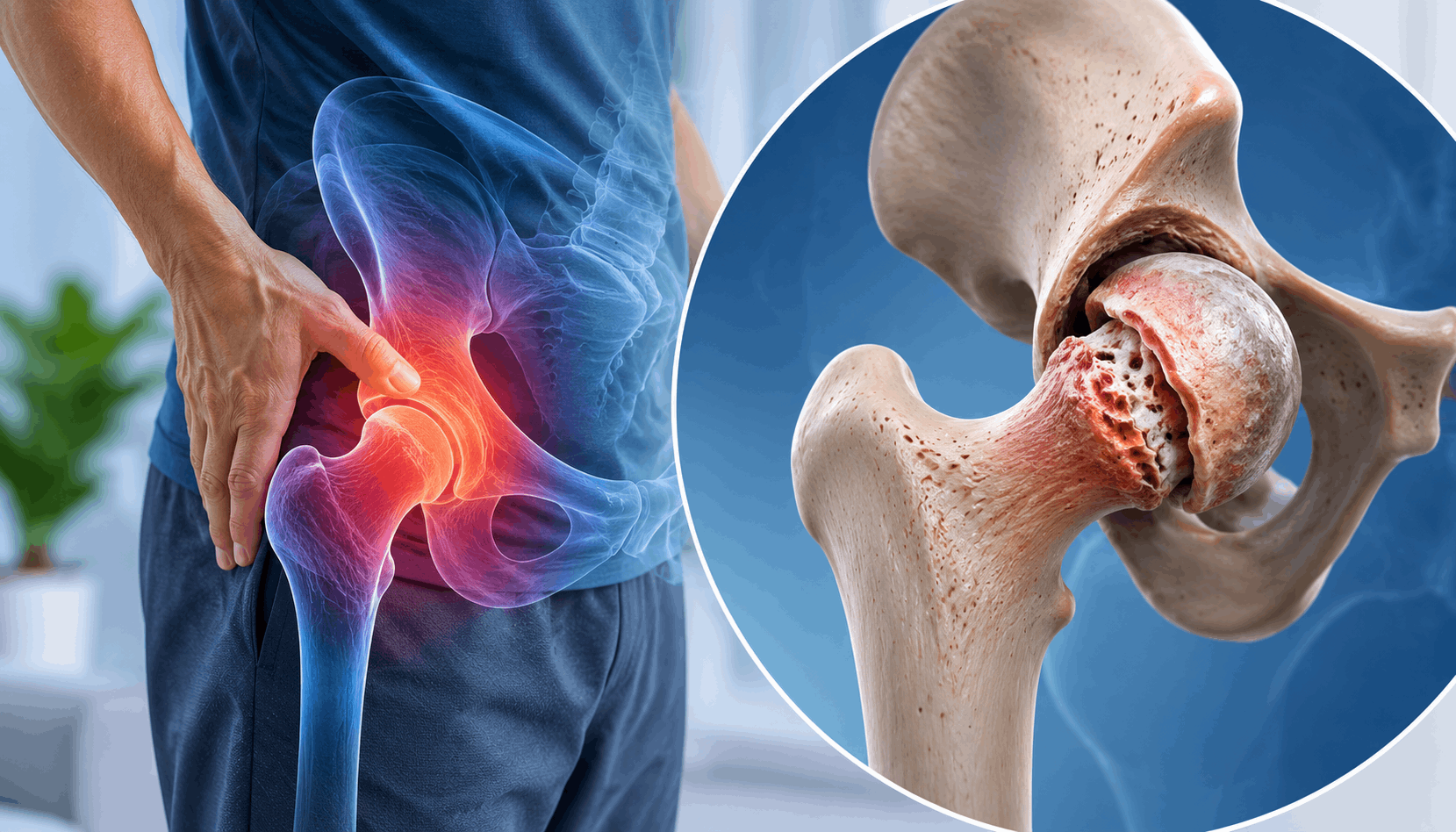
Hip arthritis is a common condition that can gradually affect mobility, comfort, and quality of life. The hip is one of the body's largest weight-bearing joints, and damage to the smooth cartilage that protects the joint can cause pain, stiffness, and difficulty with movement. For some people, symptoms develop slowly over several years, while others may experience worsening pain following an injury or another joint condition.
Early hip arthritis may often be managed with non-surgical treatments such as exercise, physiotherapy, weight management, and medications. However, advanced arthritis can cause persistent pain and significant mobility problems. In such cases, procedures such as Total Hip Replacement Surgery may be considered after a detailed orthopedic evaluation.
Understanding the causes, symptoms, and available treatment options can help patients recognize the condition early and seek appropriate medical care. Dr. Praveen Reddy provides comprehensive orthopedic evaluation and personalized treatment plans for patients experiencing hip pain and joint-related problems.
Hip arthritis occurs when the cartilage covering the surfaces of the hip joint becomes damaged or gradually wears away. Healthy cartilage allows the ball-and-socket joint to move smoothly with minimal friction. When this protective layer becomes thin or is lost, the bones can rub against each other, resulting in pain, stiffness, and reduced movement.
The severity of symptoms can vary significantly between patients. Some people may have arthritis visible on an X-ray but experience only mild symptoms, while others may develop significant pain and difficulty walking.
Hip arthritis can affect one or both hips and may become progressively worse over time.
There are several types of arthritis that can affect the hip, and the underlying cause can vary from one person to another.
Osteoarthritis is the most common form of hip arthritis. It occurs due to gradual breakdown of cartilage and changes in the underlying bone. Age is an important risk factor, but osteoarthritis can also develop earlier in life due to previous injuries, excessive joint stress, obesity, or structural abnormalities of the hip.
Rheumatoid arthritis is an autoimmune condition in which the immune system attacks the lining of joints. It can cause inflammation, pain, stiffness, and progressive joint damage. Although it can affect people of different ages, persistent inflammatory arthritis may eventually damage the hip joint.
A previous fracture, dislocation, or significant hip injury can damage cartilage and increase the risk of developing arthritis later in life. This is known as post-traumatic arthritis.
Avascular necrosis occurs when the blood supply to the femoral head is disrupted, causing bone tissue to deteriorate. If untreated, the femoral head can collapse and lead to severe arthritis.
Certain structural abnormalities present from birth or developing during childhood can affect how the hip joint functions. Over time, abnormal stress on the joint can increase the risk of early arthritis.
Hip arthritis symptoms often develop gradually. Early symptoms may appear only during prolonged walking or physical activity, but discomfort can become more persistent as joint damage progresses.
Common symptoms include:
Hip arthritis pain is often felt in the groin, although some patients experience discomfort in the outer hip, buttocks, thigh, or knee.
Mild and occasional hip discomfort does not always mean that surgery is necessary. However, persistent symptoms should be evaluated, particularly when they begin affecting your daily routine.
You should consider consulting an orthopedic specialist if hip pain continues for several weeks, becomes progressively worse, affects sleep, limits walking, or prevents you from performing normal activities.
Early assessment can help identify the underlying cause and allow treatment to begin before the condition becomes more advanced.
Diagnosis usually begins with a detailed discussion about your symptoms, medical history, previous injuries, and activity level. The orthopedic specialist will examine the hip to assess movement, strength, flexibility, and tenderness.
Imaging plays an important role in diagnosing hip arthritis. X-rays can show narrowing of the joint space, bone changes, and other signs of arthritis. In selected cases, MRI or other imaging tests may be recommended to evaluate cartilage, soft tissues, or conditions such as avascular necrosis.
A proper diagnosis helps determine the severity of arthritis and guides treatment decisions.
Treatment depends on the severity of arthritis, the patient's age, activity level, overall health, and how much the condition affects daily life. In the early and moderate stages, non-surgical treatment is often the first approach.
Pain-relieving and anti-inflammatory medications may help reduce discomfort and inflammation. These medicines should be taken only as recommended by a qualified healthcare professional, particularly if you have other medical conditions or take regular medications.
A structured physiotherapy program can help strengthen the muscles around the hip and improve flexibility, balance, and movement. Low-impact activities such as walking, swimming, and stationary cycling may also be beneficial for appropriately selected patients.
The exercise program should be tailored to your condition because certain high-impact activities can increase stress on a painful joint.
Maintaining a healthy body weight can reduce the mechanical load placed on the hip during everyday activities. For patients who are overweight, even moderate weight reduction may help improve mobility and reduce stress on weight-bearing joints.
Changing activities that aggravate symptoms can help manage hip arthritis. Choosing low-impact exercise, taking regular breaks, and avoiding movements that consistently increase pain may make everyday activities more comfortable.
In selected patients, an orthopedic specialist may consider injections to help manage hip pain. Depending on the underlying condition, different types of injections may be discussed.
The effectiveness and suitability of injections vary from person to person. They are generally considered as part of a broader treatment plan rather than a permanent solution for advanced joint damage.
If hip arthritis becomes severe and conservative treatments no longer provide adequate relief, Total Hip Replacement Surgery may be considered.
Surgery may be recommended when persistent hip pain significantly affects walking, sleeping, work, or other daily activities and imaging shows advanced joint damage.
The decision is not based on an X-ray alone. Your symptoms, functional limitations, overall health, and response to previous treatments are all important factors.
For patients with advanced hip arthritis, hip replacement can provide significant improvements in pain and mobility.
The procedure replaces the damaged surfaces of the hip joint with artificial components designed to restore smooth movement.
Many patients experience:
Recovery varies between patients, but structured physiotherapy and gradual return to activity are important parts of achieving a successful outcome.
Recovery begins soon after surgery. Patients are usually encouraged to begin moving and walking with assistance as soon as it is medically appropriate.
During the initial weeks, rehabilitation focuses on improving strength, balance, flexibility, and walking ability. Patients gradually increase their activity while following their orthopedic surgeon's recommendations.
Many people return to routine activities within several weeks, although complete recovery and muscle strengthening can continue for several months.
Choosing an experienced orthopedic specialist is important for accurate diagnosis and appropriate treatment planning. Dr. Praveen Reddy provides comprehensive orthopedic care using modern diagnostic techniques and evidence-based treatment approaches.
Each patient receives an individualized treatment plan based on the severity of arthritis, symptoms, lifestyle, medical history, and recovery goals. Whenever possible, non-surgical treatment options are considered before surgery is recommended.
His areas of expertise include hip replacement surgery, knee replacement surgery, arthroscopy, sports injury treatment, fracture management, trauma care, and comprehensive orthopedic services.
Patients seeking further information can explore Total Hip Replacement Surgery, Joint Replacement Surgery and Orthopedic Services for additional orthopedic treatment options.
What is the most common cause of hip arthritis?
Osteoarthritis is the most common type of hip arthritis. It develops when the cartilage protecting the hip joint gradually wears down. Previous injuries, excess body weight, structural abnormalities, and other medical conditions can also contribute to hip arthritis.
What does hip arthritis pain feel like?
Hip arthritis commonly causes pain in the groin, but discomfort may also occur around the outer hip, buttocks, thigh, or even the knee. Pain may worsen with walking, climbing stairs, or prolonged activity.
Can hip arthritis be cured without surgery?
There is currently no treatment that can restore severely worn cartilage to its original condition. However, early-stage arthritis symptoms can often be managed with physiotherapy, exercise, medications, weight management, and activity modification.
When does hip arthritis require replacement surgery?
Hip replacement may be considered when pain becomes persistent, significantly limits daily activities, affects sleep, and does not improve adequately with non-surgical treatment.
Is walking good for hip arthritis?
Low-impact physical activity can help maintain muscle strength and joint mobility. However, the appropriate amount and type of exercise depends on the severity of arthritis and should be guided by your healthcare professional.
Hip arthritis can gradually reduce mobility and make everyday activities increasingly difficult. Recognizing symptoms early and seeking professional evaluation can help identify the cause of hip pain and allow appropriate treatment to begin.
Many patients can manage early or moderate arthritis with non-surgical treatment, while those with advanced joint damage may benefit from Total Hip Replacement Surgery. The right treatment depends on your individual condition, symptoms, and long-term goals.
If persistent hip pain is affecting your mobility or quality of life, consult Dr. Praveen Reddy for a comprehensive orthopedic evaluation and personalized treatment plan focused on relieving pain and restoring movement.