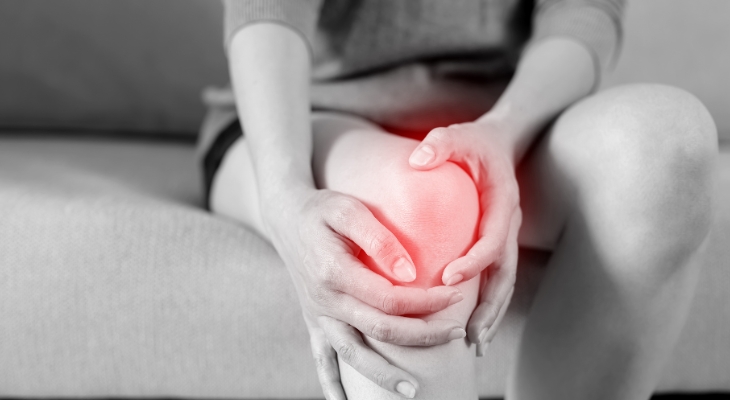
An ACL tear is one of the most common and significant knee injuries, particularly among athletes and physically active people. The anterior cruciate ligament, commonly called the ACL, helps stabilize the knee and prevents excessive forward movement and rotation of the shinbone. When this ligament is injured, patients may experience pain, swelling, instability, and difficulty returning to sports or certain daily activities.
A common question after an ACL injury is whether the ligament can heal without surgery. The answer depends on several factors, including whether the ACL is partially or completely torn, the patient's activity level, knee stability, associated injuries, and long-term goals. Not every ACL tear requires reconstruction, but some injuries are more likely to benefit from surgery.
Understanding the difference between injuries that may respond to rehabilitation and those that may require ACL reconstruction can help patients make informed decisions. Dr. Praveen Reddy provides comprehensive orthopedic evaluation and personalized treatment for ACL injuries, sports injuries, and knee conditions.
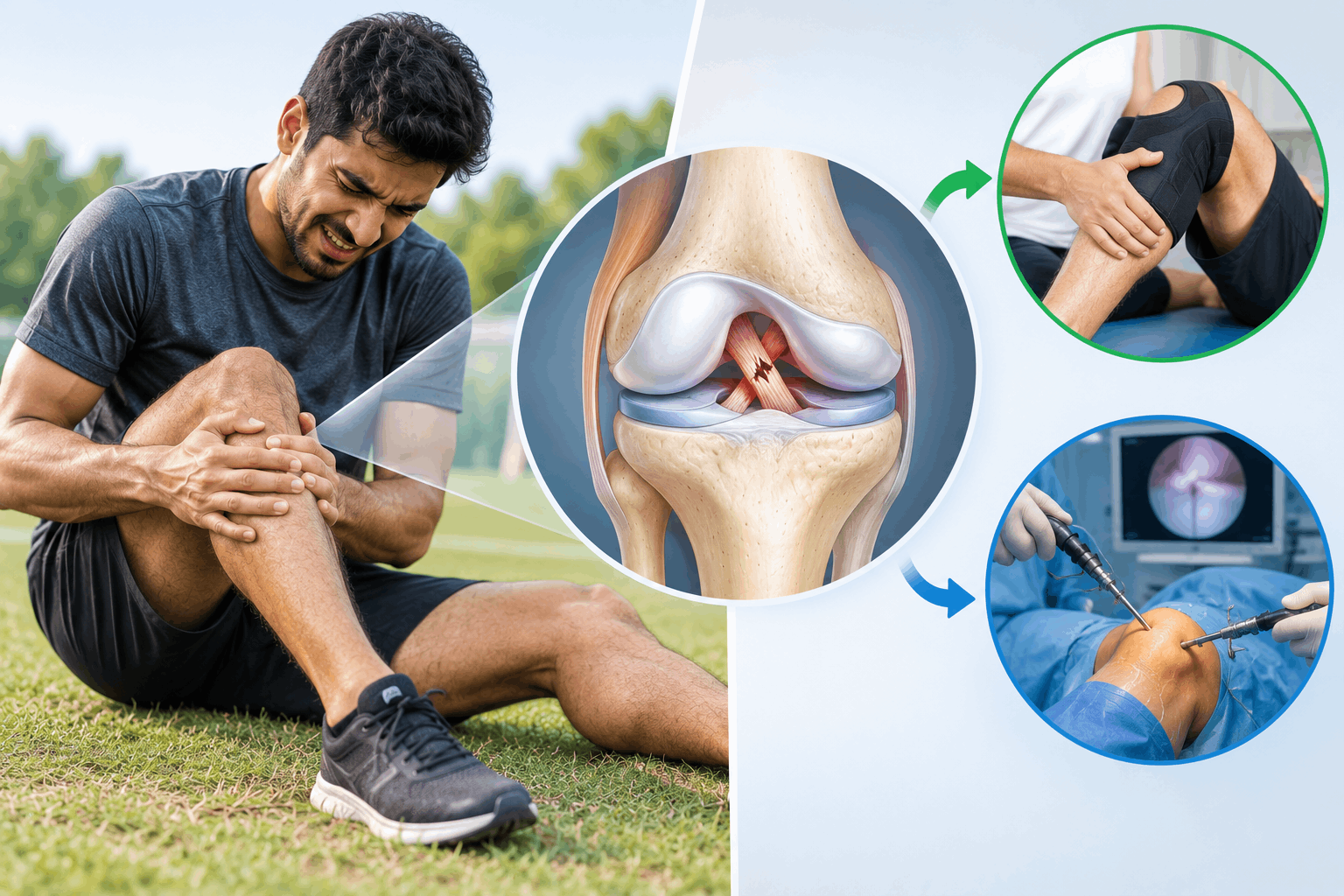
The anterior cruciate ligament is one of the major ligaments inside the knee. It connects the thighbone to the shinbone and plays an important role in controlling forward and rotational movement of the knee.
The ACL is particularly important during activities that involve sudden changes in direction, jumping, landing, or rapid deceleration. This is why ACL injuries are common in sports such as football, basketball, cricket, tennis, and other activities involving pivoting movements.
When the ACL is torn, the knee may become unstable, particularly during twisting or high-demand activities.
ACL injuries commonly occur during sudden movements rather than direct contact. A person may tear the ligament when landing awkwardly after a jump, suddenly changing direction, stopping quickly, or twisting the knee while the foot remains planted.
Contact injuries can also damage the ACL when another player or object strikes the knee.
Some ACL injuries occur along with damage to other structures in the knee, including the meniscus, cartilage, collateral ligaments, or bone.
An ACL tear often causes noticeable symptoms soon after the injury.
Common symptoms include:
Not everyone experiences every symptom. A mild or partial injury may produce less dramatic symptoms than a complete tear.
The ability of an ACL tear to heal and function adequately without surgery depends on the severity and location of the injury.
Unlike some ligaments, the ACL has limited natural healing potential because of its location inside the knee and its blood supply. A completely torn ACL generally does not reliably heal back to its original structure and tension on its own.
However, this does not mean that every ACL tear requires reconstruction.
Some patients, particularly those with partial tears or relatively stable knees, may achieve good function through structured rehabilitation without surgery. The surrounding muscles can become stronger and help provide additional stability to the knee.
The decision should be made after a detailed orthopedic assessment rather than based on the MRI report alone.
Non-surgical management may be appropriate for selected patients. It is more likely to be considered when the knee remains reasonably stable and the patient's lifestyle does not require frequent pivoting, cutting, or high-impact sports.
It may also be considered for patients who are willing to modify their activities and follow a structured rehabilitation program.
A typical non-surgical treatment plan may include physiotherapy, progressive muscle strengthening, balance training, activity modification, and gradual return to normal activities.
Regular follow-up is important to determine whether the knee remains stable as activity levels increase.
A partial ACL tear means that some of the ligament fibers remain intact. Depending on the extent and location of the injury, some patients can recover successfully without reconstruction.
Rehabilitation focuses on restoring knee movement, reducing swelling, strengthening the quadriceps and hamstring muscles, and improving balance and neuromuscular control.
However, a partial tear can still cause instability in some patients. If the knee repeatedly gives way or remains unstable despite appropriate rehabilitation, surgical treatment may need to be considered.
ACL reconstruction may be recommended when the knee remains unstable, particularly if the patient wants to return to activities involving pivoting or sudden changes in direction.
Surgery may be considered in situations such as a complete ACL tear with significant instability, recurrent episodes of the knee giving way, associated meniscus or cartilage injuries, or a patient's need to return to high-demand sports or physically demanding work.
The decision is individualized and should consider both the condition of the knee and the patient's goals.
Repeated episodes of the knee giving way are an important concern after an ACL injury. Instability can make everyday activities unpredictable and may increase the risk of additional damage to structures inside the knee.
Repeated instability may contribute to further meniscus or cartilage injury over time.
For this reason, patients with ongoing instability should not simply ignore the symptoms. An orthopedic evaluation can help determine whether continued rehabilitation or ACL reconstruction is more appropriate.
ACL reconstruction is a surgical procedure used to restore stability to a knee with a functionally insufficient ACL.
Because the torn ACL generally cannot simply be stitched back together successfully in most cases, reconstruction usually involves replacing the damaged ligament with a graft. The graft may be obtained from the patient's own tissue or, in selected circumstances, from donor tissue.
The new graft is positioned inside the knee to reproduce the function of the original ACL. Arthroscopic techniques are commonly used, allowing the surgeon to perform the procedure through small incisions.
The specific graft choice and surgical approach depend on factors such as age, activity level, anatomy, associated injuries, and the surgeon's assessment.
Surgery is only one part of ACL treatment. Rehabilitation is essential for restoring strength, movement, balance, and confidence.
Early rehabilitation typically focuses on controlling swelling, restoring knee extension and flexion, activating the quadriceps, and gradually improving weight-bearing ability.
As recovery progresses, physiotherapy becomes more focused on strengthening, balance, coordination, and sport-specific movements.
Returning to sports too early can increase the risk of reinjury. The timeline should therefore be based on objective recovery milestones rather than a fixed date alone.
ACL recovery varies considerably between patients and depends on whether treatment is surgical or non-surgical.
Patients undergoing rehabilitation without surgery may gradually return to daily activities as pain, swelling, strength, and stability improve. Those undergoing ACL reconstruction typically require several months of structured rehabilitation before returning to high-demand sports.
Return to sport should occur only after adequate strength, movement control, stability, and functional testing have been achieved.
There is no single treatment that is best for every ACL injury.
For a patient with a stable partial tear who does not participate in pivoting sports, rehabilitation may provide satisfactory function. For an athlete with a complete tear and repeated instability who wants to return to competitive sport, reconstruction may be a more appropriate option.
The goal is not simply to repair an MRI finding. The goal is to restore a stable, functional knee that meets the patient's individual needs.
Diagnosis begins with a physical examination. Your orthopedic specialist may perform specific tests to assess ACL stability and compare the injured knee with the opposite knee.
MRI is commonly used when additional information is needed. It can help confirm the ACL injury and identify associated problems involving the meniscus, cartilage, or other ligaments.
X-rays may also be performed to rule out fractures or assess the bones and overall alignment of the knee.
ACL injuries require careful assessment because treatment decisions depend on more than whether the ligament appears torn on imaging. Dr. Praveen Reddy provides comprehensive orthopedic evaluation for sports injuries and knee ligament problems.
Treatment is personalized according to the patient's injury, knee stability, age, activity level, sports participation, and long-term goals. Where appropriate, structured rehabilitation and non-surgical management are considered before reconstruction is recommended.
His orthopedic expertise includes ACL treatment and reconstruction, arthroscopy, sports injuries, knee replacement, fracture management, trauma care, and other orthopedic conditions.
Can a completely torn ACL heal without surgery?
A completely torn ACL generally has limited ability to heal back to its original structure. However, some patients can function well without reconstruction if the knee remains stable and their activity demands are lower. The decision depends on knee stability, associated injuries, and individual goals.
Can a partial ACL tear heal without surgery?
Some partial ACL tears can be managed successfully with physiotherapy and activity modification. If the knee remains unstable or symptoms persist despite appropriate rehabilitation, reconstruction may be considered.
Does every ACL tear require reconstruction?
No. Treatment depends on the severity of the tear, knee stability, associated injuries, activity level, and patient's goals. Selected patients can achieve good function through non-surgical rehabilitation.
How do I know if my ACL tear needs surgery?
Persistent instability, repeated episodes of the knee giving way, associated meniscus or cartilage injuries, and the need to participate in pivoting or high-demand sports may support consideration of reconstruction. A detailed orthopedic evaluation is necessary.
Can I play sports after an ACL tear without surgery?
Some patients can return to selected activities after successful rehabilitation, but sports involving pivoting, cutting, and sudden changes in direction may be difficult if the knee remains unstable. Your orthopedic specialist should assess your stability before you return to sport.
How long does it take to recover after ACL reconstruction?
Recovery usually requires several months of structured rehabilitation. Return to high-demand sports should be based on strength, stability, movement control, and functional testing rather than time alone.
An ACL tear does not automatically mean that surgery is necessary. Some partial tears and selected stable knee injuries can be successfully managed with structured rehabilitation, strengthening, and appropriate activity modification.
However, a complete tear with persistent instability, repeated giving-way episodes, associated knee injuries, or the need to return to high-demand sports may make ACL reconstruction a more suitable option.
The right treatment depends on the individual patient rather than the MRI result alone. If you have sustained an ACL injury or are experiencing persistent knee instability, consult Dr. Praveen Reddy for a detailed orthopedic assessment. Early evaluation can help identify the extent of the injury and guide you toward the most appropriate treatment for a safe and functional recovery.